
Industries
Medical office cleaning in San Francisco
Waiting rooms, exam rooms and staff areas clean before the first patient checks in, from a medical office cleaning service built around San Francisco medical and dental practices.
Printable checklist
Practices in towers, hospital districts and storefronts
San Francisco’s medical offices sit in very different buildings, from downtown towers full of dental and medical suites to the specialty practices that cluster around the city’s hospital campuses.
Neighborhood clinics, physical therapy studios and dental suites fill ground floors across the city as well. Whatever the building, patients form an opinion of a practice in the first minute, and SF Janitorial keeps that minute working in your favor.
The patient path, cleaned in order
A medical office visit follows the route a patient takes. The entry door, check-in counter, waiting chairs and side tables come first, followed by the waiting-room floor. Patient restrooms get fixtures, mirrors, dispensers and floors cleaned and restocked on every visit.
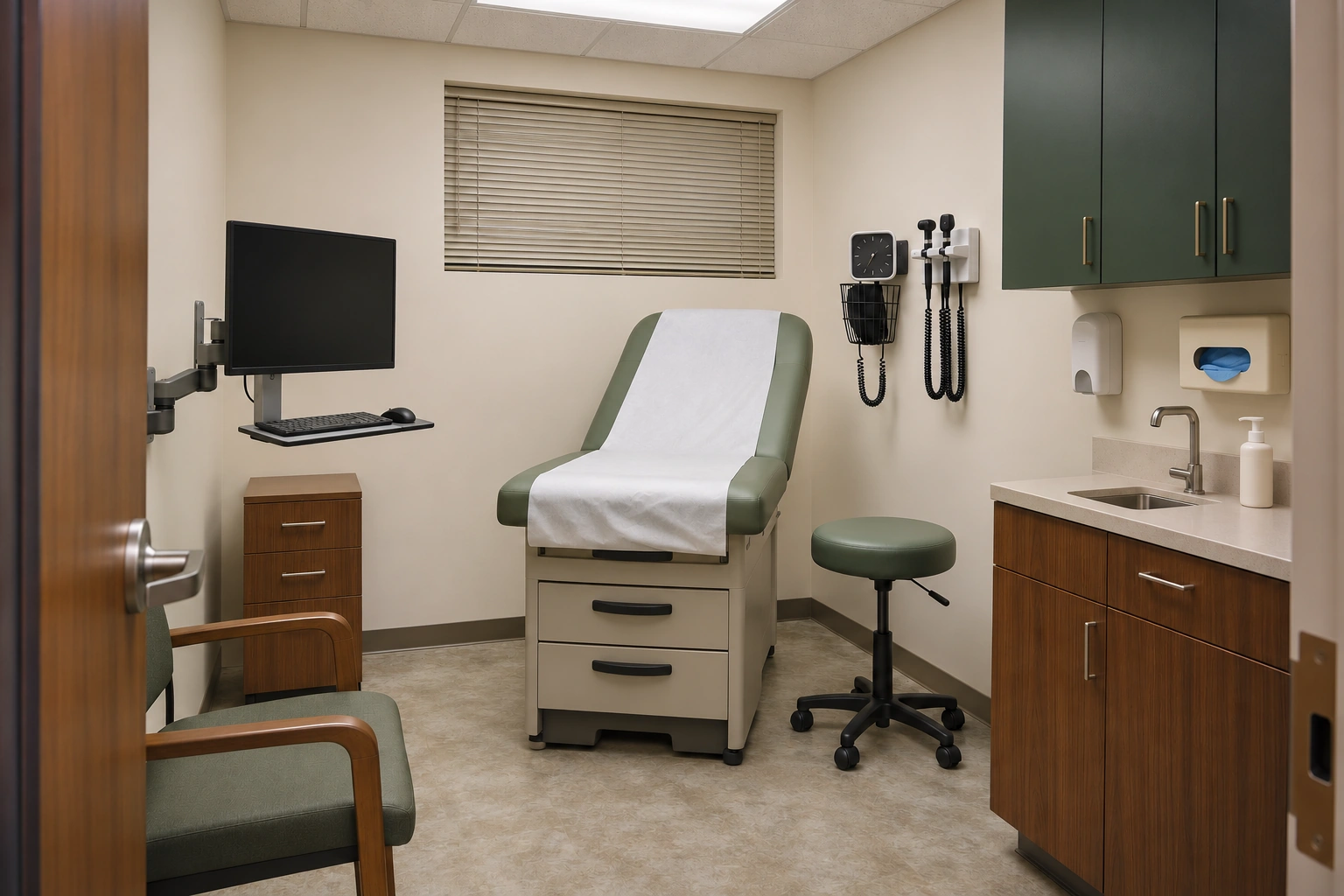
Exam rooms come next. Counters, sinks, cabinet pulls, the frame of the exam table, rolling stools, light switches and door handles are cleaned and then disinfected, and regular trash is removed. Hallways, nurse stations, the break room and back offices close out the route, so the whole practice opens ready.
Your infection-prevention plan leads
Every practice has its own infection-prevention plan, and the cleaning plan is written to match it. During the walkthrough your office manager tells us which products the plan calls for and the order rooms are done in, and exam and procedure rooms are then cleaned to that protocol on every visit. Medication storage and records rooms are cleaned at the times your office sets.
Disinfectants are EPA-registered and stay on each surface for the full dwell time on the label. Procedure rooms that need a full reset can be added for terminal cleaning, carried out step by step to the written protocol your practice keeps.
SF Janitorial crews are trained in bloodborne-pathogen safety before they work in a clinic, and their conduct is HIPAA-aware: charts, paperwork and screens are cleaned around, never read or moved.
Dental, therapy and specialty suites
Dental offices pair operatories with a sterilization area and a small lab, and the plan lists the cleaning steps for each one, taken from the dental team’s own protocol. Physical therapy and chiropractic studios have mats, tables and open gym floors that see constant use. Imaging, dermatology and eye-care suites mix patient rooms with specialized equipment, and the crew cleans around and beneath it the way your protocol describes.
Floors deserve attention too. Sheet vinyl in exam rooms, carpet in consult offices and tile in restrooms each get their own method, and deeper work is booked through floor care on a quiet weekend so patient days run without interruption.
Dental offices and waiting areas, carpets included
Dental offices often carry more carpet than people expect: the waiting area, consult rooms, the business office and sometimes the corridor to the operatories. Waiting-room carpet takes street grit from every patient, and coffee and water spills near check-in show fast. Carpets are vacuumed on every visit, spots are treated the night they appear, and periodic extraction through commercial carpet cleaning is booked for a weekend so the floor is dry before Monday’s first appointment.
Consistency matters most when cleaning medical facilities, so every room is done the same way every night. Waiting areas, exam rooms, restrooms and staff rooms each carry their own task list in the plan, so the hygienist who unlocks the door at seven finds the practice ready, with chairs straight, counters wiped and the waiting-area carpet freshly vacuumed.
Evenings after clinic, porter help during the day
Clinics usually close by early evening, which leaves an uninterrupted window to clean every room. Clinics with Saturday hours or late appointments simply choose the window that suits their calendar.
Busy waiting rooms sometimes need help between appointment waves. A day porter can wipe the check-in counter, reset patient restrooms and empty bins at midday, so afternoon patients find the office as fresh as the morning’s did.
What shapes the price for a medical office
Medical suites usually price above a standard office of the same size, because exam rooms, patient restrooms and touchpoint disinfection take more time per square foot. The main factors are the number of exam and procedure rooms, restroom count, visits per week, the disinfection steps your plan sets, floor types and any daytime porter hours.
Book a free walkthrough of the suite, and those factors become a written plan and a price for your practice, with each room’s tasks and frequency listed so your team knows what every visit covers.
Common questions
Which rooms are part of a medical office cleaning visit?
Waiting room, check-in, patient restrooms, exam and procedure rooms, hallways, nurse stations, break rooms and offices, in the order your practice prefers.
Will the cleaning follow our infection-prevention plan?
Yes. Your plan sets the products and room order for exam and procedure rooms, and the cleaning plan is written around it before the first visit.
Do cleaners look at patient files or computer screens?
No. Charts, paperwork and screens are cleaned around without being read or moved, and records rooms are opened only when your office says so.
Do you clean dental offices in San Francisco?
Yes. Operatories, sterilization areas, front desks and restrooms in dental suites are all covered, each cleaned to the steps your dental team’s infection-control protocol sets.
Do you clean the carpets in dental offices and waiting areas?
Yes. Waiting-room, consult-room and office carpets are vacuumed on every visit, stains are spot-treated the night they are found, and periodic hot-water extraction is scheduled for a weekend.
Can terminal cleaning be added for procedure rooms?
Yes. Rooms your practice assigns receive terminal cleaning to your written protocol, scheduled after the last procedure of the day.
Resources
Related guides
Services