
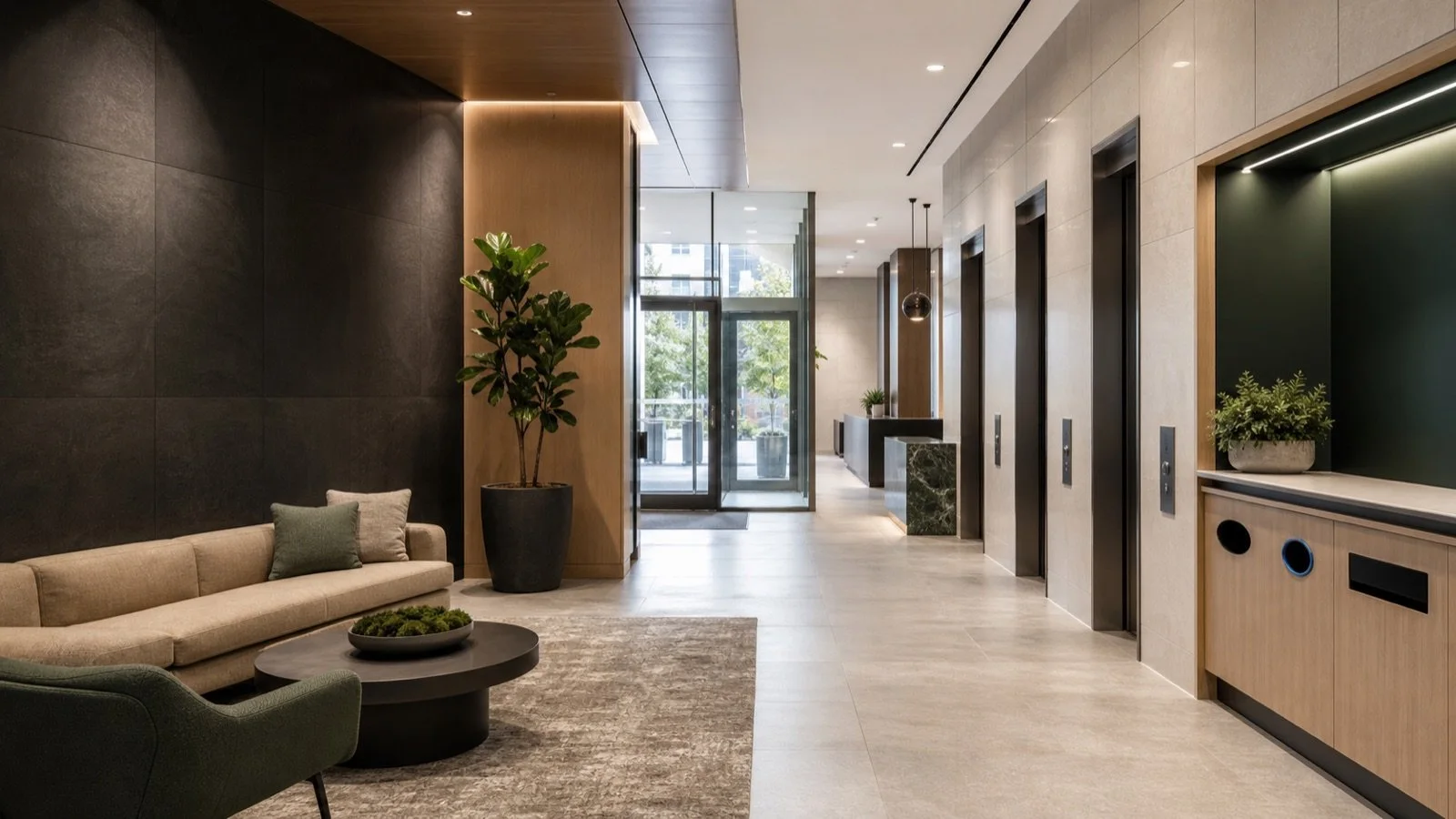
Day porter services in San Francisco
Soap stocked through lunch and lobby glass clear through the afternoon: day porter service keeps busy San Francisco lobbies, restrooms and shared spaces in order between full cleanings.
Restroom upkeep during the day
Your porter checks and cleans restroom fixtures, counters and floors through the day, and restocks soap, paper and liners, using our supplies or yours.
Entrances and shared rooms
Spot cleaning removes visible marks from entry glass, lobby surfaces and the other touchpoints you point out. Breakroom tables, counters and sinks receive attention between heavier cleaning visits.
Waste points and ordinary spills
Emptying the trash and recycling containers keeps busy common areas tidy. Your porter also clears everyday spills as they happen.
Support alongside recurring cleaning
A porter handles daytime needs while recurring janitorial visits cover the broader cleaning routine. The two services work together for properties with sustained employee or visitor activity.
Lobbies and restrooms at peak hours
In a busy office or multi-tenant building, restrooms and lobbies can look tired by midday even after a thorough evening clean. A porter working through the day checks those rooms, restocks soap and paper, clears waste points and wipes the entry glass before the next wave of visitors arrives.
Pairing a porter with after-hours janitorial visits keeps each service focused on the work it does best.
How a porter’s day runs
Porter shifts follow the building’s traffic. Early in the day, the porter works the entrance and lobby, wiping glass and clearing anything tracked in during the arrival rush. Late morning brings restroom checks and restocking before lunch, and the breakroom gets attention once the lunch crowd clears: tables wiped, counters and sinks cleaned, waste emptied.
The afternoon repeats the rounds that matter most, with a second restroom check, waste points emptied before they overflow and spills dealt with when they happen. Because the task list is set in advance, tenants see the same areas looked after at the same times each day.
Porter coverage in San Francisco office towers
A downtown high-rise puts its lobby, elevator landings and ground-floor restrooms in front of a steady stream of people all day. Evening cleaning resets them, but by midday the glass carries fingerprints and the restrooms show use. A porter assigned to those spaces keeps them at the standard tenants expect, while office cleaning inside the suites waits for the evening.
In multi-tenant buildings and life-science properties, a porter keeps the shared kitchens, conference floors and amenity spaces in order for every company on site. Your porter’s daytime tasks and the evening routine sit in one written plan, laid out the way the scope-of-work guide describes.
Sizing porter coverage for your building
Three questions settle most porter plans: when the building is busiest, how many shared restrooms and kitchens it has, and how much visitor traffic passes through the lobby. A suite with one kitchen and a short lunch peak needs a few focused hours, while a busy multi-tenant lobby benefits from coverage across the whole business day.
The walkthrough is the best time to work this out. Walk the porter’s likely route with us, point out where problems show up by midday and note the times deliveries and visitors peak. Coverage starts with the areas that need it most and widens once you see how the shared spaces hold up.
Day porter rates in San Francisco
Published 2026 market rates put a San Francisco day porter at $33 to $39 an hour. Light routes in a single lobby start around $32, and demanding posts covering several floors, hotel public areas or heavy restroom traffic sit at the $39 top. Your own hours set the total.
Monthly cost is hours times the rate. One porter on site from 7 a.m. to 3 p.m. on weekdays works 40 hours a week, or about 173 hours a month; at $42 an hour, that is roughly $7,266. A building that needs a porter only for the late-morning and lunch rush, three hours a day, books about 65 hours a month, which comes to $2,730 at the same rate.
Wages drive this service more than any other. The route matters next: how many restrooms to check, how many waste points to clear, how often entry glass and lobby floors need a wipe, and whether the porter restocks soap and paper. Early starts, weekend coverage, short-notice shifts and union contracts in towers raise the rate. We walk the building at its busy hours and set porter hours to match before quoting.
Day porter or night janitor: splitting the work
Your porter keeps shared rooms usable while your people are in, and the night crew handles the work that needs empty floors and time. Our day porter and nightly janitorial comparison sets the two side by side if you are weighing one against the other.
Frequently asked questions
Which properties benefit from a day porter?
Offices, multi-tenant buildings, college campuses, fitness facilities and other properties with busy shared spaces use daytime porter support.
What should the porter cover first?
The restrooms that run short of supplies and the entrance that looks worn by midday. Show us those on the walkthrough, and the first rounds start there.
Can porter duties include breakrooms?
Yes. Wiping tables, sinks, counters and appliance exteriors can be included.
Can a porter focus on one area of the building?
Yes. Porter duties are assigned to the areas that need daytime attention, whether that is a single lobby or several shared floors.
How many porter hours should we plan for each day?
Count the hours your shared areas are busiest. A kitchen with a lunch peak may need three hours a day, while a lobby that stays busy from opening to close needs a porter for the full business day.
Can porter hours change once service starts?
Yes. Coverage can start with the areas that need it most and then grow, shrink or move to different hours as you see how the shared spaces hold up.
Do you provide porters for retail stores and hotels?
Yes. In a store, the porter keeps entrances and customer restrooms presentable during business hours; in a hotel, the porter checks lobbies, entrances and guest restrooms between full cleanings.
How do you price porter coverage in San Francisco?
By the hour. Published 2026 market rates put a San Francisco day porter at $33 to $39 an hour, and the monthly cost is the hours on site times that rate. The number of restrooms and kitchens on the route, early or weekend starts and tower contract terms move the rate up or down.
Industries
Related industries
Services
Related services
Resources