
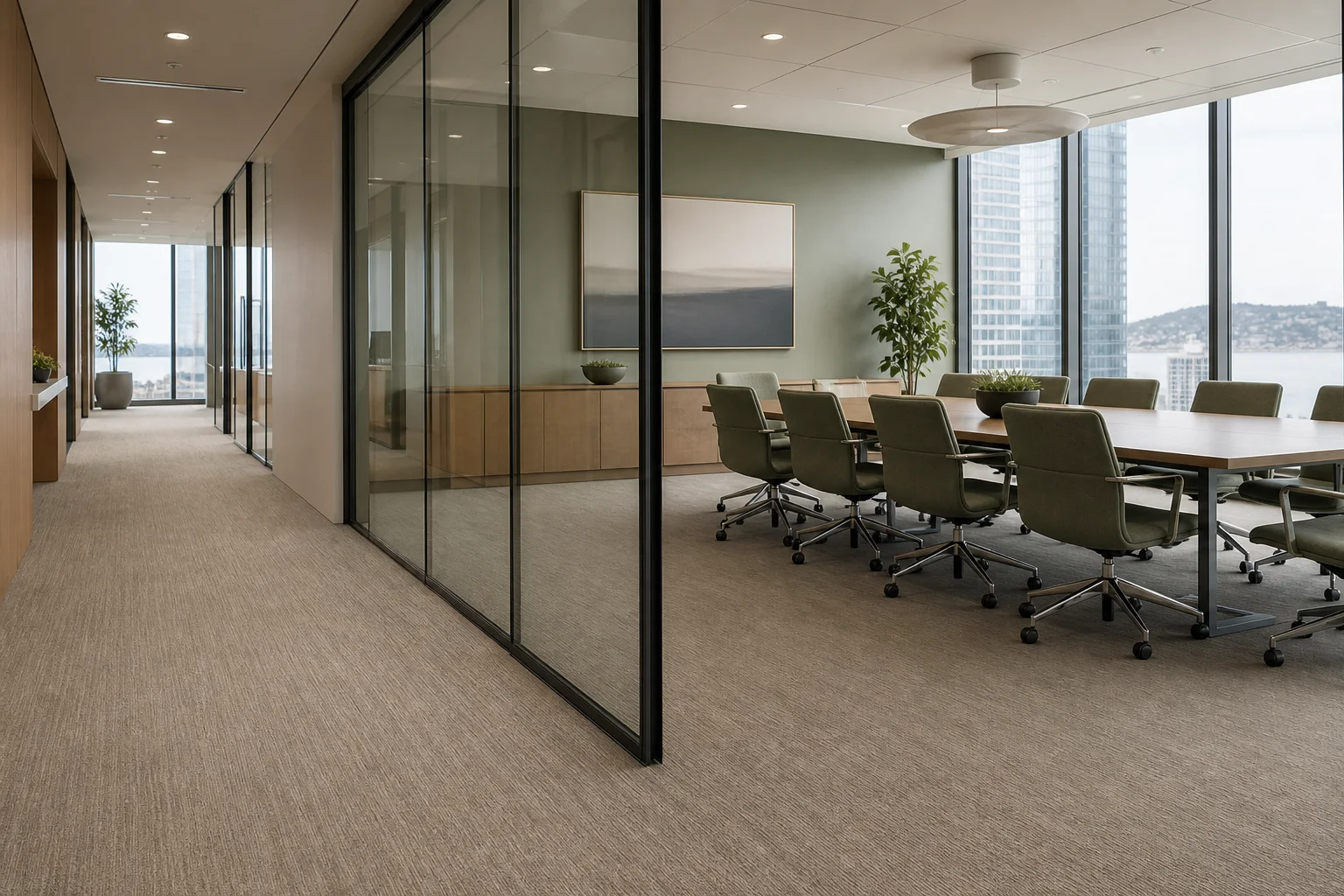
Commercial Carpet Cleaning in San Francisco
Commercial carpet cleaning can address embedded soil or specific spots beyond routine vacuuming. Method selection depends on the carpet, its condition, the affected area, access, and facility use.
- Restrooms and Floors
- Breakrooms and Shared Areas
- Waste Points and Interior Glass
Plan Access and Drying Time
A weekend or another low occupancy window can reduce disruption and provide time for drying when practical. Drying varies with the method, moisture application and recovery, carpet construction, indoor conditions, and airflow. No fixed drying time or full-dry deadline is promised. Planning should identify the carpeted areas in scope, occupancy patterns, access restrictions, and stains needing separate attention. Routine vacuuming remains part of broader janitorial or office-cleaning planning.
Choose the Right Carpet Cleaning Method
Routine vacuuming addresses loose surface debris as part of recurring cleaning. Extraction is a separate periodic treatment for embedded soil. Hot water extraction uses heated water within the extraction process; it is not the same description as steam cleaning. Spot treatment focuses on a planned stain or affected area. Carpet material, visible condition, soil level, access, and facility use guide the method discussion. Fiber, age, prior treatments, stain type, and condition also affect what result is practical.
Frequently Asked Questions
How is a commercial carpet cleaning method selected?
Selection depends on the carpet’s material and condition, along with soil level, affected area, access, and facility use.
How do vacuuming, extraction, hot water extraction, and spot treatment differ?
Vacuuming addresses loose surface debris. Extraction is a periodic process for embedded soil, hot water extraction uses heated water within that process, and spot treatment focuses on a planned stain or area.
Why might hot water extraction be planned for a low occupancy window?
A weekend or another low occupancy period can reduce disruption and provide drying time when practical, but no particular timing or availability is promised.
What affects commercial carpet drying?
The method, moisture application and recovery, carpet construction, indoor conditions, and airflow affect drying. Soil and site access also affect drying.
Can every carpet stain be removed completely?
No universal result can be promised. Fiber, age, condition, stain type, and prior treatments should be assessed before discussing a removal result.
Choose the Right Carpet Cleaning Method
A method should be selected after considering the carpet material, visible condition, soil level, affected area, access, and how the facility is used. Routine vacuuming addresses loose surface debris as part of recurring cleaning. Carpet extraction is a distinct periodic treatment intended to remove embedded soil using an extraction process. Hot-water extraction uses heated water as part of that process and should not be described as steam cleaning. Spot treatment focuses on a planned stain or affected area. Before discussing a removal result, the carpet and stain should be assessed because fiber, age, prior treatments, stain type, and condition can affect what is practical.
Plan Access and Drying Time
A weekend or another low-occupancy window may be recommended when practical so the treated area has time to dry with less disruption, but that timing is not required or promised. Drying can vary with the method used, the amount of moisture applied and recovered, carpet construction, indoor temperature, humidity, airflow, soil, and site access. No fixed drying time or full-dry deadline should be assumed. The evaluation should also identify areas in scope, occupancy patterns, access restrictions, and any stains requiring separate attention. Routine vacuuming and recurring cleaning remain part of broader janitorial or office-cleaning planning.
Frequently Asked Questions
How is a commercial carpet cleaning method selected?
Selection depends on the carpet, its condition and soil, the affected area, facility access, occupancy, and the requested result.
How do vacuuming, extraction, hot-water extraction, and spot treatment differ?
Vacuuming addresses loose surface debris. Extraction is a periodic process for embedded soil, hot-water extraction uses heated water within that process, and spot treatment focuses on a planned stain or area.
Why might hot-water extraction be planned for a low-occupancy window?
A weekend or another low-occupancy period may reduce disruption and allow drying time when practical, but no particular timing or availability is promised.
What affects commercial carpet drying?
Method, moisture application and recovery, carpet construction, temperature, humidity, airflow, soil, and site access can all affect drying.
Can every carpet stain be removed completely?
No universal result can be promised. Fiber, age, condition, stain type, and prior treatments should be assessed before a removal result is discussed.
